
Speaking With One Voice, Paying With Fifty-Two Purses
Africa's telecoms ministers left Abuja having "spoken with one voice" — but only 34 of 52 states turned up to vote for the Union's own leadership. That gap is the real story. From spectrum rents and diesel-powered towers to a $60bn AI fund that runs straight through 12,000 Nvidia GPUs, the Abuja Declaration commits a continent to coordination its politics are built to resist. The costs land nationally and now; the benefits land continentally and later. Here's what would actually move — and why even that is hard.


24th Jul. 2026, 11:45 AM . 7 mins read
What Abuja actually decided, and what it merely declared
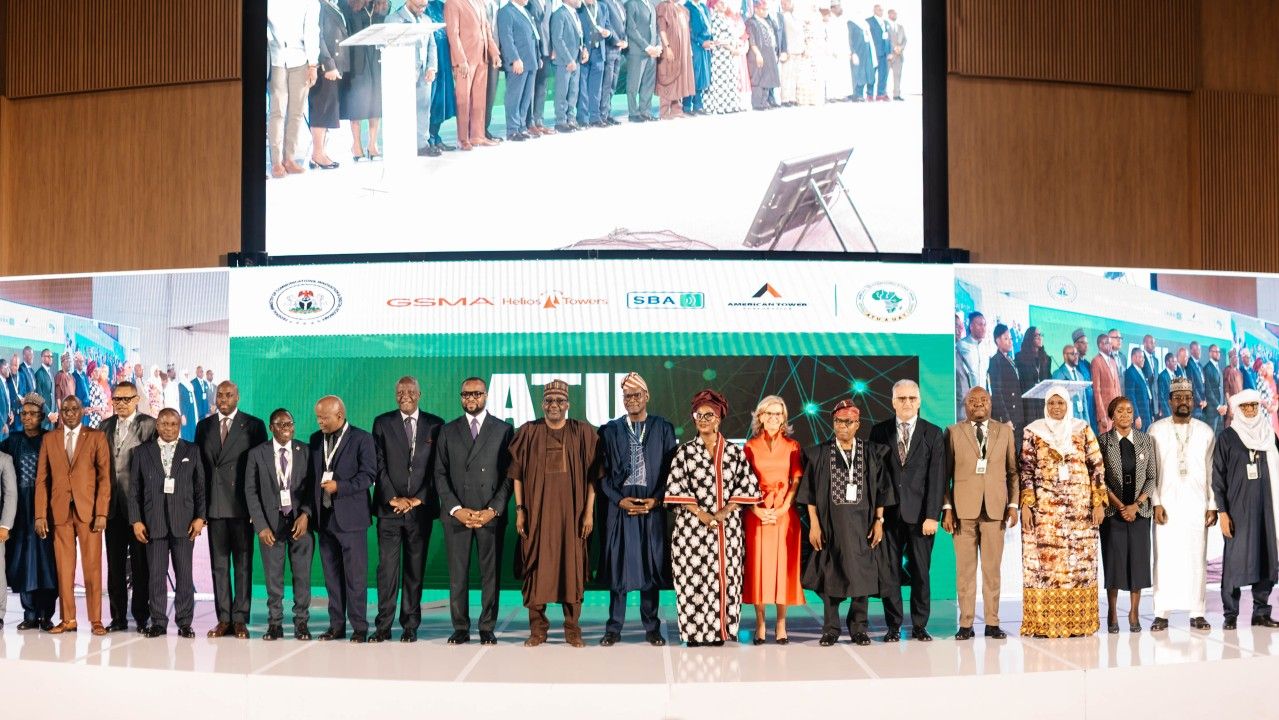
The most revealing number to come out of the African Telecommunications Union's Conference of Plenipotentiaries in Abuja last week was not in the Declaration. It was in the election results. When the Union gathered to choose a new Secretary General and "speak with one voice," only 34 of its 52 member states cast votes. Eighteen were absent or abstained from the single most consequential institutional decision the Union makes every four years.
Hold that figure next to the rhetoric. Nigeria's Vice President declared that a united Africa amplifies its influence. The ITU Secretary General told the room that Africa would help shape the digital future. And yet a third of the Union could not be mobilised to cast a ballot for its own leadership. That gap — between the language of continental unity and the observed behaviour of the states meant to embody it — is the real subject worth analysing. Everything else in Abuja is downstream of it.
The Structural Context
Start with what the ATU is, mechanically. It is a specialised agency of the African Union with no coercive power over its members. It cannot license a spectrum band, fine a telco, or compel a treasury to fund anything. Its outputs are coordination goods: common positions to carry into the ITU Plenipotentiary in Doha later this year, model frameworks, and declarations. These are real but weak instruments. They work only to the extent that member states independently choose to honour them — which is a polite way of saying they work when national political incentives happen to align with the continental script.
This is the political-economy lens, and it is unavoidable here. A communications minister's career is made or unmade at home, not at the conference. The domestic reward structure is concrete: spectrum revenue that plugs a fiscal hole this quarter, a network rollout ribbon-cutting before an election, a national champion telco kept solvent. The Declaration's commitments — technology-neutral regulation, regulatory parity, continental harmonisation, fair access to spectrum and fibre, shared infrastructure — are, almost without exception, commitments that pay off slowly, diffusely, and continentally, while their costs land quickly, concentrated, and nationally. That asymmetry is the entire game. Any analysis that skips it is reading the press release, not the situation.
There is a broader pattern this fits inside. Africa's regional-integration history is full of frameworks whose declaratory ambition outran their domestication: treaties signed with fanfare, then left to stall in the gap between signature and national law. The mechanism is always the same — cheap to sign, expensive to implement. Abuja belongs to that tradition, not outside it. The interesting question is not whether that gap exists, but whether there is a design that narrows it. Hold that thought; it is where this piece ends.
The Technical Deconstruction
Now to the plumbing, because this is where declarations either mean something or dissolve.
Technology neutrality. The concept is being sold as common sense: don't pick winners between fibre, mobile, and satellite; just get people connected. The engineering case is genuine — a satellite quietly backhauling a mobile site in a hard-to-reach region does exactly what neutrality promises. But "technology neutral" is not a neutral phrase in fiscal terms. It is a redistribution of rents dressed as a principle.
Consider what neutrality does to the spectrum balance sheet, which is the section worth slowing down on because it is where the money actually is.
For two decades, African treasuries have treated spectrum less as infrastructure than as a fiscal asset — something to auction to mobile operators for hard currency and recurring fees. The scale is not trivial. IMF work on telecom taxation found that in some African economies with heavy sector-specific taxes, total telecom revenues including licence and spectrum fees ran well over one percent of GDP, and in Senegal mobile companies alone supplied 20 to 30 percent of corporate income tax over a multi-year stretch. Mobile services now contribute roughly $220 billion to Africa's economy, about 7.7 percent of output. When a revenue base is that concentrated and that convenient, ministries defend it — and they defend it through the design of the auction itself.
The tell is in the pricing. GSMA analysis found that between 2010 and 2017, spectrum in developing markets cost, on an income-adjusted basis, more than three times what it cost in developed ones — achieved through high reserve prices, artificial scarcity, and thin spectrum roadmaps. South Africa's 2022 auction raised over R14 billion and was celebrated as a fiscal win; what was not tallied was the other side of the ledger — higher operator costs, higher consumer prices, and slower rollout into the rural areas where returns are already marginal. The result is a paradox visible across the continent: advanced networks in the cities, millions still unconnected, and licensed spectrum sitting idle over the countryside because no one can make the rural economics work at the price the state set.
Now layer neutrality on top. A genuinely technology-neutral regime lets satellite, fixed-wireless, and community networks serve those same rural clusters without buying nationally-auctioned mobile spectrum on the incumbent's terms. That is good for coverage. It is also a direct threat to the auction's value: every user reached by a low-earth-orbit operator outside the spectrum-fee perimeter is a user the treasury cannot monetise through the old mechanism. So the operative question is not whether ministers will sign a neutrality commitment — they did — but whether their finance ministries will forgo the rents neutrality implies. The realistic answer is that neutrality will be honoured where it is fiscally cheap and quietly diluted where it is fiscally expensive, through exactly the levers that never make the headline: landing-rights fees, gateway requirements, local-equity conditions, and licensing categories drawn narrowly enough to keep the auction intact. The Declaration commits states to connect the rural poor while leaning on a revenue tool that makes connecting them more expensive. Watch which imperative gives way when the two collide.
Who actually builds the towers — and what powers them. If spectrum policy is where the state extracts rent, tower infrastructure is where the physics of the problem lives, and a panel at the conference put the mechanics on display. The unglamorous truth of African connectivity is that mobile operators increasingly do not own their towers. Independent tower companies — Helios, IHS, American Tower, SBA, several of them partners to the conference itself — build and power the passive infrastructure and lease it back, letting operators offload capital expenditure and the daily grind of keeping a rural site running. The IFC's own research quantifies why this matters: in emerging markets where the towerco model has taken hold, 4G population coverage runs about 10 percentage points higher, median download speeds about 2.2 Mbps faster, mobile-internet prices modestly lower as a share of income, and tower markets meaningfully less concentrated. This is the shared-infrastructure principle the Declaration endorses, and unlike most of its commitments, it is one with a working evidence base and live commercial actors behind it.
But the binding constraint on that model is not spectrum or fibre. It is electricity. In much of Africa the grid is too weak or too absent to run a cell site, so the single largest operating expense for a tower operator is not rent or maintenance — it is fuel and power. Every diesel generator on a rural tower is a line item that rises with the price of imported fuel and the weakness of the local currency, and data traffic, 5G, and AI workloads are all pushing site-level power demand up, not down. This is why towercos are moving to hybrid systems — solar, battery storage, microgrids — to cut diesel dependence: it is a cost-control strategy first and a decarbonisation story second. And it exposes the deepest coordination failure of all, one no declaration in Abuja addressed. Telecom planning and energy planning run in separate silos, under separate ministries, even though a rural tower with its own solar-and-battery microgrid is, functionally, a piece of rural electrification infrastructure. A continent serious about connecting its rural poor would treat the tower and the grid as one problem. It treats them as two, and the connectivity gap is partly the residue of that separation.
Regulatory harmonisation and parity. The Declaration commits states to align rules across borders and across agencies. Nigeria — the host, the incoming chair, the self-styled continental leader — supplies the cautionary detail. Weeks before Abuja, its Ministry had to order the NCC, NITDA and NDPC to suspend enforcement of new digital-platform rules while it built a harmonised national framework. The trigger was concrete: in December 2025 the NCC issued a draft Internet Code that duplicated provisions already sitting in NITDA's 2022 Code of Practice, on top of the NDPC's separate data-protection mandate — three agencies with overlapping claims on the same digital terrain. If the country positioning itself as Africa's digital leader needs an emergency freeze to stop three of its own regulators from colliding, harmonising across 52 jurisdictions of radically uneven state capacity is not a policy. It is an aspiration wearing a policy's clothes. Harmonisation across states presupposes coherence within states, and within-state coherence is precisely what the Nigerian episode shows to be scarce. The towerco panel made the same point from the operational side: panelists called for Africa to be treated as a single market with harmonised cross-border rules, standardised equipment tariffs, and blended finance to derisk rural investment — a sensible ask, and one whose difficulty is measured precisely by how far today's reality sits from it.
ATLAS Umoja — the AI language network. This is where the mechanism-design questions are sharpest. The initiative, launched at the conference, expands Nigeria's N-ATLAS — described as Africa's first government-backed open-source large language model, built by the AI firm Awarri and first unveiled at the UN General Assembly in 2025 — into a continental platform. The animating statistic, repeated by Minister Bosun Tijani, is that fewer than 2 percent of Africa's languages are meaningfully supported by modern AI, on a continent home to nearly a third of the world's languages. That gap is real, and it is worth closing.
The forensic question is not whether African languages belong in AI — obviously they do — but whether this particular structure can survive contact with its own economics. And here the honest answer is that the model has to reckon with a cost base it does not control.
Consider the compute economics, because they are brutal and specific. Africa holds about 18 percent of the world's people and under 1 percent of global data-centre capacity, and a far smaller share of the GPUs that actually train models. Between 2023 and 2025 the global cost of cloud GPU compute rose more than 300 percent on supply shortages — and African institutions feel that inflation more acutely because they pay in weaker currencies and import the hardware over duties. As of mid-2026, renting an Nvidia H100 in Africa ran around $13.55 an hour, roughly 85 percent above the global benchmark. One estimate puts unmet demand for model training at 7 million GPU-hours over three years. The continent's flagship response, the $60 billion fund announced at the 2025 Kigali summit, has as its largest single hardware line 12,000 Nvidia GPUs — which is to say the marquee sovereignty vehicle runs directly through the supply chain it is meant to reduce dependence on. This is the part of "AI sovereignty" the phrase conceals: the initiative can reduce dependence on foreign datasets and models while leaving dependence on foreign compute and capital almost entirely intact. Sovereignty over the corpus; tenancy over the silicon.
So what would actually work? Not a centralised continental model waiting on treasury cheques for GPU time in dollars nobody has spare. The precedent that already functions is the opposite shape. Masakhane — a grassroots, distributed African-NLP community of well over a thousand contributors across some 30 countries — has produced open datasets, benchmarks, and hundreds of openly hosted models without owning a single data centre. GhanaNLP's translation work and MakerereNLP's East African corpora follow the same template: local labs curating the data they know best, pooling it under open licences, training modestly and sharing results. The lesson is that the durable asset in low-resource language AI is not compute — it is annotated data, benchmarks, and the community that maintains them, none of which require hyperscale infrastructure. A viable ATLAS Umoja would treat national projects like N-ATLAS as federated building blocks under shared standards, push the expensive training toward whoever can supply subsidised or renewable-powered compute, and — following the "anchor tenant" logic development economists have proposed for African compute — use governments to guarantee demand for public-interest uses (health, courts, education, tax) rather than to finance the hardware directly. That is a coordination problem, which the ATU could plausibly help solve. The failure mode is the reverse: a centralised platform, launched on the enthusiasm of a summit and the goodwill of an industry lobby, that quietly relocates an unfunded compute bill onto a handful of strained treasuries and stalls in year three.
The state-capacity question WIDEN quietly raises. Alongside the headline tracks, the conference hosted the launch and expansion of WIDEN, the Women in Digital Experts Network — an initiative aimed at digital inclusion, STEM education, cybersecurity and AI training, and, notably, at moving African women into leadership roles inside global bodies like the ITU and the ATU themselves. Nigeria's Ministry committed to a national chapter. It is easy to file this under conference ceremony, and easy to be cynical about it. That would be a mistake, but so would uncritical applause. The substantive point sits underneath the mission statement: every argument in this piece turns on state capacity — the ability to design an auction well, to make three regulators cohere, to run a federated data programme, to negotiate credibly at Doha. Capacity is people. An initiative that widens the pipeline of skilled personnel and pushes African experts into the rooms where global standards are set is addressing the actual bottleneck, not a symbolic one. The test, as with everything else in Abuja, is whether it is resourced past the launch — whether the Nigeria chapter gets a budget and a mandate, or a press release and a photograph. The distinction between those two outcomes is the distinction this entire piece is about.
Second-Order Effects & Cycle Positioning
First-order, the Abuja Declaration reads as a clean win: cheaper smartphones, more connectivity, African AI, shared infrastructure, women in leadership, unity before Doha. Second-order, the tensions surface.
One: neutrality erodes the spectrum-auction fiscus, and nothing in the Declaration replaces it. A commitment to connect rural populations that simultaneously undercuts the revenue line historically used to fund universal-service obligations is in tension with itself. That tension is not a drafting error; it is the central unfunded choice the Declaration papers over.
Two: the shared-infrastructure and green-power agenda is real and evidence-backed, but it collides with the siloing of energy and telecom policy. You cannot decarbonise rural towers and close the rural connectivity gap while treating power and connectivity as two ministries' separate problems. The towerco model has the commercial actors and the data on its side; what it lacks is the cross-sectoral coordination only states can supply, and states are structured to withhold it.
Three: harmonisation without enforcement capacity produces the appearance of coordination and the reality of forum-shopping. When many states adopt a common framework but each retains full discretion over domestication, capital flows toward whichever jurisdiction interprets the framework most loosely. "Continental harmonisation" can, perversely, reward the least rigorous regulator. The real success metric is therefore not adoption — adoption is free — but convergence in actual enforcement, which is slow, unglamorous, and the thing no plenipotentiary conference is convened to celebrate.
Four: the AI-sovereignty framing carries a dependency it does not advertise. The pitch is African AI reducing reliance on foreign labs; the plumbing runs on foreign compute, foreign hardware, and, in this case, the coordinating hand of a global mobile-operator association. That is not a reason to dismiss it — you build with the capital that shows up — but "sovereignty" is a heavy word for an architecture whose most expensive layer is imported.
The Conclusion: What Would Actually Move
It would be easy to end on the fatalism the turnout number invites. That would also be lazy. The recurring pattern across every track — spectrum, towers, power, regulation, AI, skills — is identical: the technically sound answer requires states to coordinate across a boundary, and the political incentives reward guarding the boundary instead. But that pattern is not a law of nature. It is a design problem, and design problems have better and worse answers. The mistake most harmonisation efforts make is to treat a sovereign state's discretion as something you can lecture it into surrendering. You cannot. You can only make convergence worth more than the discretion it costs. That reframing changes what the ATU — or a credible institution working alongside it — should actually try to build.
Four principles separate the levers that work from the declarations that don't.
Start with reciprocity rather than best practice. A regulator gives up discretion only if its peers give up something equivalent and its own operators gain access to their markets in return. Harmonisation framed as mutual market access — the logic already animating the African Continental Free Trade Area — is a trade, and trades hold; harmonisation framed as "adopt these superior rules" is a lecture, and lectures get filed. Second, ring-fence the technical from the fiscal. Independence fears are sharpest exactly where this piece located the money and the power: spectrum revenue, network shutdowns, lawful intercept. So do not start there. Start where discretion has low political value — type approval, numbering plans, band plans, dig-once rules — and build the habit of convergence, and the institutional trust it requires, before going anywhere near the sensitive core. Third, peer accountability, not supranational authority. States that will not take instruction from a continental body will tolerate being reviewed by their peers against agreed benchmarks with published results. It is softer, it preserves face, and it builds the relationships that later carry harder commitments — the same logic the African Peer Review Mechanism was built on. Fourth, make the funder the enforcer. A regulator that will not move for an ATU declaration will move for a concessional infrastructure facility that requires the reform as a condition of disbursement. Development and philanthropic capital can carry the incentive a declaration cannot — legitimately, provided the conditionality is transparent rather than quiet. Undergirding all four: an independent secretariat with genuine technical credibility, because trust follows competence, and a harmonisation body the strongest regulators privately respect gets deference while a talking shop gets ignored.
These principles point to one concrete, buildable vehicle — and it is the opposite of the instinct most such efforts follow. Do not draft a grand continental telecom code. Comprehensive codes fail: they present too much surface area for objection and demand too much translation between common-law and civil-law traditions. Draft instead a narrow, modular model instrument covering only infrastructure investment and sharing — the one domain where the harmonisation case is strongest and the sovereignty threat is weakest. Five modules do most of the work. A mandatory passive-sharing obligation requiring operators and towercos to grant access to masts, ducts, poles and land on fair, reasonable and non-discriminatory terms under a regulated reference-pricing methodology. A dig-once rule requiring every public road, rail or utility works to lay shared duct, with access at a standard fee — the single highest-return provision and the easiest to defend to a sceptical public. A standardised rights-of-way regime: a model fee schedule, a statutory approval clock that deems a permit granted if not refused within a set window, and single-window permitting to end municipal fragmentation. An open-access wholesale obligation on any fibre or data-centre capacity built with public or development-finance money, protecting the co-investment logic from capture. And type-approval mutual recognition, so a device certified in one adopting state is accepted across the others. Each module can be adopted on its own; none forces a treasury to surrender the spectrum rents or the security controls it will fight to keep. That modularity is not a compromise — it is the mechanism. It lets convergence begin where it is cheap, and earns the trust that might, eventually, let it reach where it is dear.
None of this dissolves the core asymmetry. Costs still land nationally and now; benefits still land continentally and later. But a modular, reciprocal, peer-reviewed, funder-backed instrument changes the arithmetic on the margin — and margins, compounded across enough regulators and enough years, are how institutions are actually built. The alternative is the well-worn one: another declaration, admirable in its intentions, waiting in the gap between signature and law.
Because in the end, the Declaration was always the easy part. The question Abuja leaves behind is whether anyone will now do the hard, unglamorous, module-by-module work the Declaration was written to avoid.
Share this article



Stay informed
Get our latest thinking delivered to your inbox each month
We respect your inbox. Unsubscribe anytime from any email.